


-
The Viennese Secession: Art in the time of canons
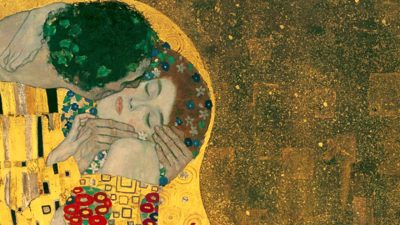
Apart from Gustav Klimt and Franz Matsch, many other artists participated in the beginning of the movement: Wilhelm List, Carl Moll, Ernst Stöhr, Max Kurzweil, Koloman Moser, and Josef Engelhart. This core group essentially founded in 1897 the Vienna Secession after a coffee-house meeting. Later, the architects Josef Hoffmann, who was also one of the co-founders of the Wiener Werkstätte (Vienna’s Workshops), and Josef Maria Olbrich joined the illustrious group as well. Gustav Klimt , barely aged 35, took up the presidency. Soon a motto was found as well: “Every era needs its own art and all art needs its freedom.” Thus, program and mission statement for the movement were…
-
[P2/2] An explosion of passionate emotions: From Mayerling to Sarajevo
As previously mentioned, the second half of the 19th century was characterised by a plethora of constructional activity in Vienna. In 1857, at the behest of Emperor Franz Joseph, the demolition of the medieval city wall that still surrounded the city centre was initiated. During this period, the Ringstraßenviertel was created: a thriving new district of magnificent buildings and beautiful parks, while the essence of regeneration provided Gustav Klimt and his partners with the opportunity to showcase their talent. The first commissions did not take long to follow, and they were asked to contribute artistically to the festivities on the occasion of the silver wedding of Emperor Franz Joseph and…
-
[P1/2] An explosion of passionate emotions: From Mayerling to Sarajevo
The two decades between 1885 and 1918 were a turbulent time of social and cultural paradigm shifts for Vienna, capital of a multi-ethnic empire on the verge of losing the pomp and glory of the 19th century. However, the creation of The Viennese Secession and the Wiener Werkstätte (Viennese Workshops) marked a leap into the modern age, at least culturally. In 1861, the local artists had already joined the Genossenenschaft der bildenden Künstler Wiens (Association of Fine Artists in Vienna) and found a home in the Künstlerhaus, a renaissance-style building designed by August Weber, that was situated directly at the main boulevard in Vienna. However, the building soon outgrew its…
-
雷诺阿:女性性感之美的庆祝者
在第一集当中,我们为大家介绍了印象派运动的起源。第二集我们将介绍皮埃尔·奥古斯特·雷诺阿,印象派发展过程中的领军人物。 雷诺阿于1841年2月25日出生在法国利摩日。父亲是莱奥纳德·雷诺阿,母亲是玛格丽特·梅莱特,他是家中第六个孩子。三年之后的1844年,雷诺阿一家人搬到了巴黎。在1848年,雷诺阿在德拉萨学校(基督教会的学校)入学。因为在音乐理论方面天赋异禀,雷诺阿很快被作曲家古诺德指挥的合唱团选中,成为其中的一员。但是,命运的发展却大相径庭。1854年,雷诺阿的父母带他离开了学校,在莱维兄弟的作坊开始学习画瓷器。 莱维兄弟作坊的一名工人,Emile Laporte在空余时间里画油画。他建议雷诺阿尝试他的画布和颜料。在这样的背景下,未来的印象主义大师的第一幅作品诞生了。在雷诺阿的家中,这幅作品在Laporte的目光中庄严诞生了。雷诺阿父母对于孩子很有信心,他们听从了Laporte的建议。雷诺阿的母亲只是建议先攒钱,因为这位未来艺术家的母亲深知赚钱的不易——裁缝莱奥纳德·雷诺阿的收入仅仅能够让七个孩子勉强糊口——可以想象,能够走向高雅艺术的可能性微乎其微。 1858年,皮埃尔·奥古斯特·雷诺阿十七岁这年,他离开了莱维兄弟的作坊。陶瓷工艺的大企业迎来了机械化革命,莱维兄弟的作坊在浪潮中已经破产了。 但是在这个时候,他买了专业的油画工具并且创作了第一幅肖像画。1861年,卢浮宫颁发给雷诺阿的许可证,他可以临摹卢浮宫中的绘画作品。最后,在1862年,雷诺阿考入了波尔多国立美术学校,由艺术教授Charles Gleyre亲自授课。波尔多国立美术学校也是一个独立的工作室,从此开启了这位艺术家生活的新篇章。 Gleyre教授的工作室坐落在左岸,雷诺阿在附近租住,在巴黎算是站住脚跟。雷诺阿在这一时期最重要的事情就是和工作室的其他伙伴们交流有关艺术的看法。他们也成为了雷诺阿最好的朋友。 当时雷诺阿活动的地理范围并不是特别大 – 他没有钱去旅行,但在巴黎周围地区有令人兴奋的风景。由于他们是巴比松画派发展起来的,雷诺阿和他的朋友们更是觉得自己就是风景画的传承。枫丹白露森林是一个取之不尽的风景画素材库。有时候,他们住在Chailly-en-Bière村庄的 Mère Anthony的旅店中。大约1866年,雷诺阿描绘用惊人的绘画作品勾勒了安东尼母亲的旅店。雷诺阿作品是一幅巨大的帆布油画,大约两米高,重现了旅店的场景而非想象作品。这就是当年他们相聚在马洛特的时光。 显然,这幅作品的结构非常出色:女仆和坐着的绅士都面向观众,画笔在画布的边缘戛然而止,而几乎处于半圆形的一组人物形成了感觉的真实空间。研究雷诺阿的学者认为,这是Le Coeur,而不是Sisley,在安东尼母亲的旅店的那幅作品中出现过。正式Le Coeur,让雷诺阿得以进入人物肖像画委员会,并且在之后这份工作成为了他收入的主要来源。最重要的是,雷诺阿迎来了他的第一位缪斯,虽然并不是Le Coeur本人。Le Coeur的妹妹LiseTréhot成为了雷诺阿的女朋友。Lise不仅仅是雷诺阿在1865年到1872年的模特,她成为了雷诺阿风格的第一个模特。1866年,一个非常年轻的Lise在雷诺阿的精挑细琢中出现了。同年1867年,他笔下绘画了遮阳伞下的Lise。这张画的细薄质地上,Lise脸上柔和的阴影和身体泛着粉红色的光泽,与巴齐耶的《家庭肖像》以及莫奈的《花园》中的女人有异曲同工之妙,预示着三四年之后印象派运动的爆发。对于当时的雷诺阿来说,Lise的脸色变成了女性美的标尺。 在1870年,雷诺阿完成了Odalisque。精美的丝绸和东方锦缎装饰着Lise,金色刺绣的闪闪发光。她灿烂的黑头发装饰着橙色羽毛,周围是华丽的地毯。 1870年7月18日,法国人的正常生活被普鲁士宣战所中断。连如何骑马都不知道的雷诺阿在命运的安排下被送往了骑兵营。他先是到了波尔多,然后是塔布斯。雷诺阿病情恶化,波尔多的医生挽救了他的性命。1871年3月,他被遣散回到巴黎,前往拉丁区。在那里,他得知了巴齐耶的死亡——这种冲击比战争本身更为深刻。雷诺阿骑兵的故事在他的画中延续了。在1872年,他在Bois de Boulogne创作除了《骑手》。亚利桑那州的模特是达拉斯女士,是达拉斯上尉的妻子,Le Coeurs介绍给雷诺阿认识的。马驹背上的小男孩是Charles Le Coeur的儿子。这幅画的尺寸巨大——几乎正方形帆布的每一面都延伸到大约两个半米的地方,使其成为了一幅鸿鹄巨制。 最终在19世纪60年代后期,巴齐耶和雷诺阿梦想的时代来临了。艺术家协会设法汇集了29位艺术家,供给展出165件作品。其中有六幅油画和一幅油画是雷诺阿的作品。观众更加关注大型的画布作品:舞蹈家,巴黎人(或蓝衣女士),欧德昂剧院的演员亨利特·亨利特(The Henriette Henriot)和洛奇(也称为L’Avant-Scène)。第一次,轻盈、和谐、无拘无束的色彩浪潮与雷诺阿画布相结合,是古典主义的经典之作。 十七世纪七十年代可能是雷诺阿创作生涯中最幸福的时光。在Rue Cortot工作室的一个不引人注目的小花园,于1875年开始出租,成为这个时期最精美的绘画。雷诺阿在Le Moulin de la Galette的餐厅里找到了他最后一幅作品的主题。它更像是一个主题的主题:雷诺阿的画布从来没有像这样的主题,因为任何一种叙事或绘画都排斥。 更多阅读,请关注下一集…… 更多阅读,请点击:亚马逊,Parkstone International,当当。
-
Henri de Toulouse-Lautrec: The clubfoot who loved promiscuous women
Henri de Toulouse-Lautrec did not just capture life in his paintings, drawings and lithographs, but he also caught the life of a singular and unique Paris that did not exist before him and disappeared after him. During the third Republic, the new Paris imagined by Haussmann was already a reality with its boulevards, its department stores, commercial malls, stations, iron-framed markets and luxurious private hotels. The city was expanding further away from its centre invading the last resisting hills. Only the distinctive blocks of the village of Montmartre remained, where vineyards grew and where Auguste Renoir worked outdoors whilst his wife and children gathered snails in the poppy fields. New…
-
Henri de Toulouse-Lautrec: The clubfoot who loved promiscuous women
Henri de Toulouse-Lautrec did not just capture life in his paintings, drawings and lithographs, but he also caught the life of a singular and unique Paris that did not exist before him and disappeared after him. During the third Republic, the new Paris imagined by Haussmann was already a reality with its boulevards, its department stores, commercial malls, stations, iron-framed markets and luxurious private hotels. The city was expanding further away from its centre invading the last resisting hills. Only the distinctive blocks of the village of Montmartre remained, where vineyards grew and where Auguste Renoir worked outdoors whilst his wife and children gathered snails in the poppy fields. New…
-
[3/3]Paul Gauguin: In the footsteps of Fletcher Christian (caption of the Bounty)
At the autumn of 1891, Gauguin decided to leave the civilized city of Papeete for the village of Mataiea where aborigines were living a natural life. He painted the sand on a shore, immense trees and mountains. He caught the effects of the blazing sun revealed by the sculpted volume of the tree. It mattered to him to give each painting a title in Tahitian. (Fatata te Mouà (At the Foot of a Mountain). He delineated flats of bright colors patches with contours. Little figures of Tahitian women – whom Gauguin never stopped drawing pictures of doing their activities – began to appear in the landscape. (Matamoea (Landscape with Peacocks).…
-
[2/3] Paul Gauguin: Goodbye Mette!
In the autumn of 1888, there was a break in Gauguin’s isolation in Brittany. Vincent van Gogh, whom Gauguin had met in Paris in 1886, had been asking him to come to Arles for a long time. Vincent had a dream: to create in the south of France a community of painters that could help them all to overcome the difficulties of life. Theo van Gogh had negotiated a contract with Gauguin according to which the painter had to carry out twelve paintings per year for him whilst Theo would pay him 150 francs of monthly salary. On October 21, 1888, Gauguin finally made the journey to Arles. For the rational…
-
[1/3] Paul Gauguin: The Temptation of the Orchid Woman
In 1886, the works of Gauguin were presented at the Eighth Impressionist Art Exhibition. Paul Gauguin was ten years younger than the Impressionists, which in this case is of major importance. Indeed, when Gauguin was still a child, Monet, Renoir and Sisley already used to meet up in Professor Gleyre’s studio and were starting their artistic journey. Nadar, the great photographer who offered them the premises for their first exhibition, was a friend of Gauguin’s tutor, Gustave Arosa. It is thus hardly surprising that Gauguin, an amateur painter of twenty-six, followed the turns taken by the newly born Impressionist movement with emotion. And it was of course an honor for…
-
[Part 5/5] Vincent Van Gogh: End of trajectory: Auvers-sur-Oise
Van Gogh drew everything he saw: a “death’s head” moth, grasshoppers, irises and even simple blades of grass. As soon as he was allowed to go beyond the gate, he started to paint blossoming meadows, and later yellow fields. He painted olive trees and the huge plane trees on the streets of the small town of Saint-Rémy. Van Gogh was not going to surrender. He drew and painted as if possessed, hoping that his thirst for work would help him recover. When there was no model, he copied with oil the engravings that his brother had sent to him at his request. He had always loved Millet, and now copied…

This is an interactive art blog in multi languages, you will find new articles on artists, art history, exhibitions, etc. Contributions welcome.




You must be logged in to post a comment.