


-
Claude Monet: Second part
At difficult moments in their lives Monet and the other Impressionists were assisted by their friends. They did not have many, but these provided both material support by buying their paintings and, more importantly, the warmth of their friendship. Among them were the amateur painter Gustave Caillebotte, who had exhibited along with the Impressionists and who enjoyed a considerable fortune. The baritone of the Paris Opera, Jean-Baptiste Faure, bought paintings by Édouard Manet and some Impressionists, including many paintings by Monet. The Parisian civil servant Victor Chocquet bought paintings by the Impressionists as soon as he had sufficient funds. Dr. Gachet owned some works by Monet and his friends, whom…
-
Claude Monet: In search of new light
For Claude Monet the designation “Impressionist” always remained a source of pride. He chose a single genre for himself, landscape painting, and in that he achieved a degree of perfection none of his contemporaries managed to attain. Claude Monet loved Normandy passionately, and always considered it his true country. Yet he was born in Paris, on Rue Lafitte, and baptized Claude Oscar on 14 November 1840. In 1845, when Claude was five years old, his father opened a small store in Le Havre. With his father’s consent Claude went to Paris for two months in 1854, and later extended his stay. The city fascinated him, the Louvre was inexhaustible, and…
-
Pierre-Auguste Renoir: Second part.
Read part 1 here. In 1877, at the Third Impressionist Exhibition, Renoir presented a whole panorama of over twenty paintings. They included landscapes created in Paris, on the Seine, outside the city and in Claude Monet’s garden; studies of women’s heads and bouquets of flowers; portraits of Sisley, the actress Jeanne Samary, the writer Alphonse Daudet and the politician Spuller; and also The Swing and Dance at the Moulin de la Galette, Montmartre. The labels on some of the paintings indicated that they were already the property of Georges Charpentier. The artist’s friendship with the Charpentier family was to play a significant role in shaping his destiny. Madame Charpentier’s salon…
-
Pierre-Auguste Renoir: The celebrator of feminine sensuality.
The first episode introduced the origin of the Impressionist movement, and here is the second episode: Pierre Auguste Renoir, a leading painter in the development of the Impressionist style. Pierre Auguste Renoir was born in Limoges on 25 February 1841. He was the sixth child in the family of Léonard Renoir and Marguerite Merlet. Three years later, in 1844, the Renoirs moved to Paris. In 1848 Auguste began attending a school run by the Frères des Écoles Chrétiennes. Renoir excelled in musical theory and was soon accepted into the choir at the Église Saint-Eustache, directed by the composer Charles Gounod. Fate, however, decided otherwise. In 1854, the boy’s parents took…
-
Impressionism: The revolution of rebellious artists
The adventurers of art at the end of the 19th century and the beginning of the 19th and the beginning of the 20th century; a saga that reads like a novel, the one of transgressions, the one of shape and colour. Here is the first episode: it tells the story of the artists who rebelled against the establishment and initiated the Impressionism in painting. Impression: Sunrise was the prescient title of one of Claude Monet’s paintings shown in 1874 in the first exhibition of the Impressionists, or as they called themselves then, the Société anonyme des artistes, peintres, sculpteurs, graveurs (the Anonymous Society of Artist, Painters, Sculptors, and Engravers). Monet…
-
META-ARTE
En las artes siempre hay dos mundos: el mundo real, el que nos rodea, y el mundo del artista, el de su obra. El autor puede contar cualquier historia, desde la más realista a la más inverosímil, pero cuando estamos delante de una obra de arte establecemos un pacto con él, bajo el cual nos creemos todo lo que nos cuente o muestre. La metaficción es romper ese pacto, romper esa realidad ficticia. El autor juega con la realidad y la ficción, mezclándolas, introduciendo la realidad en la ficción, o viceversa, hasta desdibujar los límites de su creación. La metaficción le recuerda a uno que estamos ante una obra irreal,…
-
雕刻轮廓
毫无疑问,拉斐尔在文艺复兴时期的艺术中扮演着举足轻重的角色。如果没有拉斐尔笔下那美丽的圣母玛利亚,没有胖胖的小天使,我们都没办法想象那个时代会变成什么样子。 但是,拉斐尔的才华绝非仅限于绘画,他在再生的发展过程中也发挥着重要的作用。尽管拉斐尔自己并没有创作过再生版画,但他为雕塑家马康托尼奥雷蒙迪的雕塑创作过很多绘画作品。拉斐尔和雷蒙迪两人共同创作了不少当时意大利最负盛名的版画,也带来了罗马的版画业的兴盛。 古腾堡印刷厂通过简易而低成本的复制,使得大众阅读得以成为可能。拉斐尔和雷迪蒙的作品则促进了艺术的流通,使得艺术得以翻出庙堂的高墙。 奇怪的是,拉斐尔只是文艺复兴时代涉猎过版画的两位伟人之一。另一位是泰坦,相比之下,就远不如拉斐尔成功了。 他们将充满活力的艺术带出教堂,这可能能够解释他们在文艺复兴时代默默无闻的原因。在文艺复兴时期,艺术的赞助者多为教堂、宫廷以及美第奇家族(意大利王国的皇族)。但是教堂和宫廷(也包括美第奇)相互交织,为了宗教之外的目的的艺术并没有太大的发展空间。而即使拉斐尔与雷迪蒙的雕刻确实是基于宗教的主题,也无法与教堂那些恢宏、生动和壮丽的绘画相提并论。 即使拉斐尔同时代的人忽视了雕刻艺术,他的作品《帕里斯的审判》对之后的艺术家,例如马奈,产生了深刻的影响。
-
Mr. Roboto: The Human Mechanics of Francis Picabia’s Art
“The machine has become more than a mere adjunct of life. It is really a part of human life…perhaps the very soul…” said the French Dada-artist Francis Picabia (1879-1952). While unbeholden to any singular artistic style, Picabia built a world out of his Transparencies and machinery or “mechanomorphs” − a world that mirrors and reveals the construction of our own. Influenced by the fast-paced grind of American industry and specifically New York life in the early 20th century, Picabia paintings display the blueprint of an ascension, of our mechanical evolution over time, and the trajectory in which we still head. They just as poignantly, if not more so, represent the…
-
Star Wars: the fashion is strong with this one
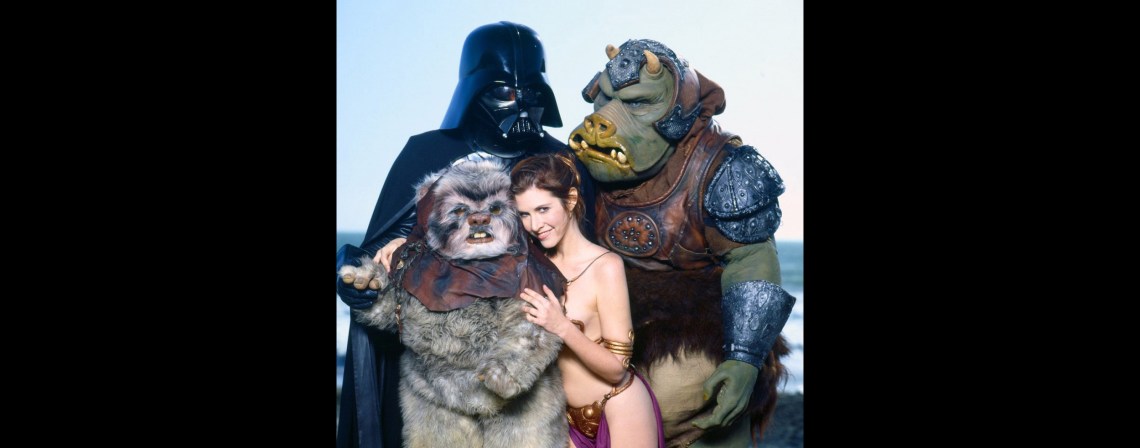
If you consider yourself a true fashionista, any phrase starting with the words “a long time ago in a galaxy far, far away” will have you waking up screaming in the middle of the night. How far exactly is it from that little vintage shop where you go scouting every Sunday before brunch? And, even more unnerving – how long ago has it been designed? Anything before last Spring’s Fashion Week, you might just lose a few hundred Instagram followers, no matter how many pics of Starbucks pumpkin lattes you post to redeem yourself. You just got a taste of the Dark Side. But fear no more: geek is now…
-
Turquerie: Evolution of Turkish theme in European art, style
In 18th-century Europe, especially with the arrival of Ottoman embassies to the royal courts, Turkish fashion, also named ‘Turquerie,’ emerged sumptuously influencing fine arts, architecture and music. The Western world’s interest in the East is not something new. Since the Crusades, the travels of warriors, merchants and pilgrims to the towns ruled by the Turks helped to maintain this interest on slow but rational grounds. In the 14th century, the carpets weaved in Eastern Anatolia were considered luxury goods in France, the country that they were exported to and decorated the French palaces. It is enough to look at the paintings by 16th century painters such as Hans Holbein, Lorenzo…

This is an interactive art blog in multi languages, you will find new articles on artists, art history, exhibitions, etc. Contributions welcome.




You must be logged in to post a comment.