-
Christianity: Transforming humanity through faith and compassion
From the early apostles to modern-day believers, the work and legacy of Christianity continue to inspire hope, foster community, and guide countless lives in pursuit of spiritual fulfillment and moral purpose.
-
Traveling to Italy? Here are some interesting museums for you
Whether exploring Renaissance art, ancient Roman relics, or contemporary works, Italy's museums provide an enriching and unforgettable experience.
-
Masterpieces of Faith: The Eternal Presence of Christ in Art
From Byzantine mosaics to Renaissance masterpieces and contemporary interpretations, artists have portrayed Christ in diverse ways, capturing his divinity, compassion, and teachings.
-
Messengers of Hope: The Symbolism of Angels in Pictures of the Virgin Mary
Angels add a sense of heavenly grace and spiritual significance to images of Mary, reinforcing her role as an intercessor between humanity and the divine. Through their presence, artists convey the belief in Mary's perpetual intercession and the divine assistance offered to believers through the heavenly hosts.
-
Art or Scandal? The Provocative Legacy of Courbet’s The Origin of the World
Lacan, the last owner of Courbet’s The Origin of the World, loved the painting so much that he couldn’t even bring himself to look at it. Instead, he hid it behind a “safer” painting.
-
A Guide to the treasures housed in Europe’s most iconic museums
Germany has played a significant role in shaping European art through its diverse contributions across various periods and movements. From the pioneering expressions of the Northern Renaissance to the innovative explorations of the Bauhaus movement, German artists have left an indelible mark on the art world.
-
Divine Depictions: The Christ in Art Through the Ages
Since the dawn of Christianity, artists have been fascinated and stirred by the figure of Christ. His likeness appears in frescoes on the walls of catacombs that date from Roman times; he is featured in the stained glass windows of Gothic churches; and he can be found in various forms in today’s pop culture.
-
Aestheticism: Where Art and Beauty Converge
William Hogarth wrote his Analysis of Beauty in 1753, during the Age of Enlightenment. Through this captivating text, he tends to define the notion of beauty in painting and states that it is linked, per se, to the use of the serpentine lines in pictorial compositions.
-
Art’s Dance with Darkness: Capturing the Essence of the Devils
Artists have grappled with the devil's image, creating works that range from diabolical to symbolic, reflecting the complex relationship between good and evil in human culture and imagination.
-
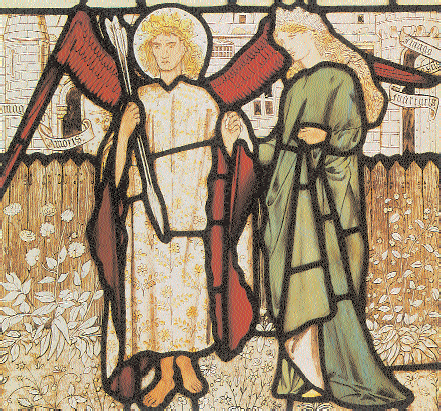
Death in Art: A Profound Exploration of the Inevitable
Artists across time have grappled with the concept of death, producing works that range from poignant reflections on the transience of life to powerful symbols of rebirth and transformation.

This is an interactive art blog in multi languages, you will find new articles on artists, art history, exhibitions, etc. Contributions welcome.




You must be logged in to post a comment.