


-
Edward Hopper
The text below is the excerpt from the book Edward Hopper, written by Gerry Souter, published by Parkstone International. Edward Hopper’s realist creations in oil, watercolour and etchings earned him a degree of celebrity throughout America’s interwar years from the 1920s to the 1940s. During the last twenty years of his life, the honours came, the medals, the retrospective exhibitions and the invitations to countless museum and gallery openings, many of which he turned down. He was a recluse, a captive of his overachieving upbringing, a prisoner of humiliating memories of early rejection, the tenant of his failing body and the sole occupant of a darkly silent philosophy that resonated with virtually…
-
Shelley’s Art Musings – Das große C-Wort…
Nein, es ist nicht das, was Sie denken, es ist das Wort, das im Moment in aller Munde ist… Coronavirus. Man kann kaum den Fernseher oder das Radio einschalten oder sich an die sozialen Medien wenden, ohne Werbung zu sehen, die einem sagt, zu Hause zu bleiben, oder die schreckliche Situation zu hören, in der sich die Welt derzeit befindet. Worüber wir nicht viel hören, sind die herzerwärmenden Geschichten, die sich daraus ergeben haben. Wir sehen nicht, wie die Welt als eine Massengemeinschaft zusammengekommen ist, um gemeinsam an der Bekämpfung dieser Pandemie zu arbeiten. Auf der ganzen Welt ist Anerkennung für unsere Gesundheitsdienste und unsere Mitarbeiter an vorderster Front eingekehrt. Wir haben gesehen, wie diejenigen,…
-
Shelley’s Art Musings – Le grand mot en C…
Non, ce n’est pas ce que vous pensez, c’est le mot qui est sur toutes les lèvres en ce moment… Coronavirus. Vous pouvez à peine allumer la télévision ou la radio ou vous tourner vers les médias sociaux sans voir de publicités vous disant de rester chez vous, ou entendre la situation désastreuse dans laquelle se trouve le monde actuellement. Ce dont on entend peu parler, ce sont les histoires de réchauffent le cœur qui en ont résulté. Nous ne voyons pas comment le monde s’est rassemblé en tant que communauté de masse pour travailler ensemble au contrôle de cette pandémie. La reconnaissance est venue du monde entier, pour nos services de santé et…
-
Shelley’s Art Musings – The great C word…
No, it isn’t what you are thinking, it is the word on everyone’s lips at the moment… Coronavirus. You can barely turn on the TV or the radio or turn to social media without seeing adverts telling you to stay at home, or hearing the dire situation that the world is currently in. What we don’t hear a lot about is the heart-warming stories which have resulted as an outcome. We aren’t seeing how the world has come together as a mass community to work together on controlling this pandemic. Recognition has come the world over, for our health services and front-line workers. We have seen support on mass for those who have had…
-
Blake connaissait déjà le Coronavirus en 1795
Le texte ci-dessous est l’extrait du livre William Blake: écrit par Osbert Burdett, publié par Parkstone International. La magie singulière de Blake consistait à attiser les sentiments tout en s’adressant, apparemment, à la raison. La clé réside dans l’assimilation qu’il faisait entre « intelligence » et « imagination ». Sa propre prose fournit le meilleur vernis pour sa poésie et ses idées axiomatiques sont simples. « L’énergie est l’éternel délice » ; « Le Bien est le passif qui se soumet à la Raison. Le Mal est l’actif qui prend source dans l’Énergie. Bien est Ciel. Mal est Enfer. » Ce faisant, Blake fait allusion à Milton et proteste, comme tous…
-
Wir bitten um einen Kommentar über: William Blake kannte bereits in 1795 den Coronavirus
Der untenstehende Text ist ein Auszug aus dem William Blake von Osbert Burdett, herausgegeben von Parkstone International. Blakes wundersamer Zauber ging davon aus, Gefühle aufzuwühlen, wo scheinbar der Verstand angesprochen wurde. Der Schlüssel liegt hier in seiner Gleichsetzung von „Verstand“ und „Imagination“. Seine eigenen Prosaschriften sind das beste Referenzmaterial zu seiner Lyrik und seine axiomatischen Vorstellungen sind überaus schlicht: „Energie ist ewige Freude;“ „Gut ist das Passive, das der Vernunft gehorcht. Böse ist das Aktive, das der Energie entspringt. Gut ist Himmel. Böse ist Hölle.“ Somit behauptete Blake – in Anlehnung an Milton, und sich wie alle Mystiker, einschließlich Bunyan25, dagegen erhebend, Religion mit Moral zu verwechseln –, dass die Begriffe „gut“…
-
William Blake already knew about the Coronavirus in 1795
The text below is the excerpt from the book William Blake, written by Osbert Burdett, published by Parkstone International. Blake’s peculiar magic was to stir the feelings when appearing to address the mind. His identification of “intelligence” with “imagination” is the key. His own prose provides the best glosses on his poetry, and his axiomatic ideas are simple. “Energy is eternal delight;” “Good is the passive that obeys reason. Evil is the active springing from energy. Good is heaven. Evil is hell.” Thus, taking a hint from Milton, and protesting as all mystics, including Bunyan, have protested that religion is not to be confused with morality, Blake asserted that the words good…
-
Shelley’s Art Musings: Spotlight on Vincent Van Gogh
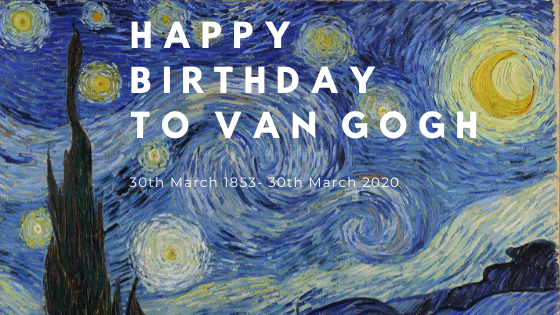
The world is a pretty glum place at the moment, isn’t it? COVID-19, social distancing, self-isolation and a media frenzy, which is enough to send the sanest of us to a brink of depression, which is probably making you look at things a little different. Appreciating smaller things, like the fact that spring is on the way and the first signs of life rejuvenation are in the air, or perhaps you are belated to wake up and the mornings are a little lighter. Depression was a common state for Van Gogh, which is very hard for anyone to understand the depths of another’s mental state, but as it is his birthday,…
-
S’il vous plaît, réveillez-moi quand Valentine est fini
La Femme au châle rouge, 1920. Huile sur toile, 100 x 81 cm. Musée cantonal des Beaux-Arts, Lausanne. Femme offrant du lait au chat, 1919. Huile sur toile, 100 x 81 cm. Collection privée. Baigneuse, buste, 1910. Huile sur toile, 61 x 51 cm. Kunstmuseum Luzern Museum of Art, Lucerne, dépôt d’un collectionneur privé. Femme nue assise dans un fauteuil, 1897. Huile sur carton marouflé sur contre-plaqué, 28 x 27,5 cm. Musée de Grenoble, Grenoble. Femme au bain, 1895. Huile sur toile, 98 x 130 cm. Collection privée. Femme au perroquet, 1909-1913. Huile sur toile, 114 x 163 cm. Collection particulière. Homme et femme, 1913. Huile sur toile, 200 x…
-
Bitte wecken Sie mich auf, wenn Valentine vorbei ist
Badende im Wasser, 1910. Öl auf Leinwand, 61 x 51 cm. Kunstmuseum Luzern, Luzern. Depositum eines Privatsammlers. Frau mit Katze, 1919. Öl auf Leinwand, 100 x 81 cm. Privatsammlung. Frau mit rotem Schal, 1920. Öl auf Leinwand, 100 x 81 cm. Musée cantonal des Beaux-Arts, Lausanne. Akt in einem roten Lehnstuhl, 1897. Öl auf Karton auf Holz, 28 x 27,5 cm. Musée de Grenoble, Grenoble. Badende, 1895. Öl auf Leinwand, 98 x 130 cm. Privatsammlung Frau mit Papagei, 1909. Öl auf Leinwand, 114 x 163 cm. Privatsammlung. Mann und Frau, 1913. Öl auf Leinwand, 200 x 250 cm. Privatsammlung. Frühling, 1908. Ort unbekannt. Frauenakt, auf dem Rücken liegend, 1921. Öl…

This is an interactive art blog in multi languages, you will find new articles on artists, art history, exhibitions, etc. Contributions welcome.






You must be logged in to post a comment.